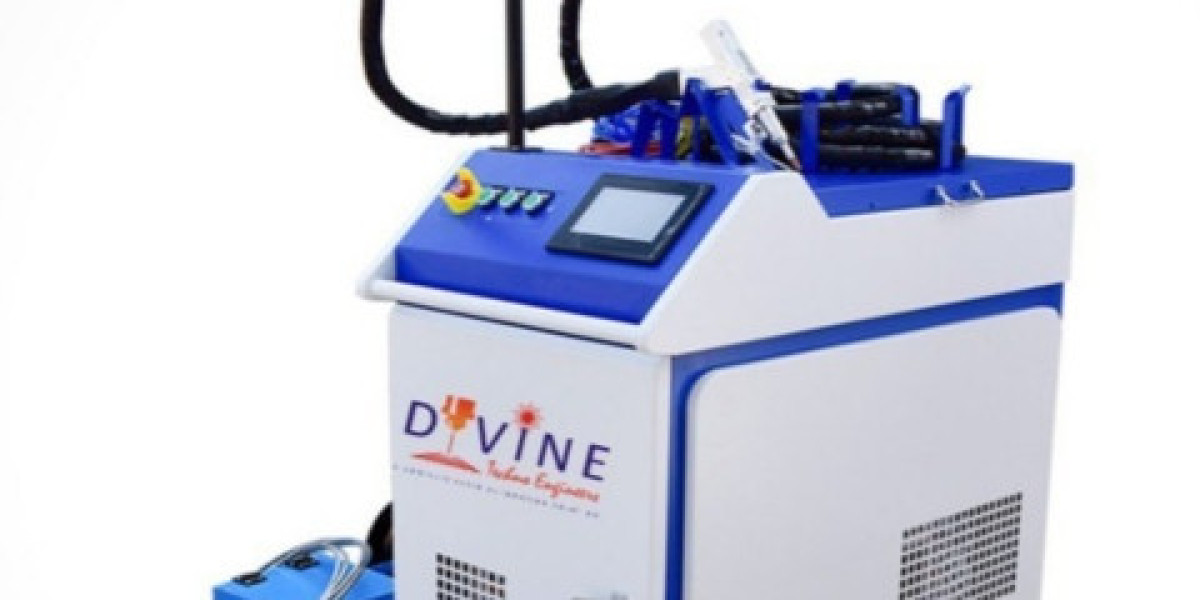

When businesses are looking for faster and more precise ways to join metal components, laser welding has become an important option for modern fabrication. A laser welding machine for sale can provide manufacturers, workshops, and metalworking professionals with a practical solution for different welding applications. From stainless steel and carbon steel to aluminum and other compatible metals, laser technology can be used across many production environments.
Choosing the right equipment requires an understanding of the materials, welding requirements, production volume, and working conditions. With several machine configurations available on the market, buyers can select equipment according to their specific manufacturing needs rather than simply choosing the most expensive option.
Understanding Laser Welding Technology
Laser welding uses a concentrated laser beam to generate heat at the joining area of two metal pieces. The energy is directed toward a precise location, allowing the material to melt and form a welded joint as the components are brought together.
Compared with conventional welding processes, laser welding is based on highly concentrated energy. This makes accurate control particularly important when working with thin sheets, detailed components, and products where the appearance of the finished joint matters.
Modern laser welding equipment is used in workshops and factories involved in metal fabrication, machinery production, automotive components, kitchen equipment, electronics-related parts, and customized metal products.
Why Are Businesses Looking for a Laser Welding Machine for Sale?
The increasing interest in laser welding equipment is connected with the changing requirements of modern manufacturing. Many businesses need welding equipment capable of handling repetitive production tasks while maintaining consistent working results.
A suitable laser welding machine for sale can be considered for both established manufacturing facilities and smaller fabrication workshops. The appropriate machine depends on the intended application, material thickness, production requirements, and available workspace.
Before purchasing, businesses should identify the type of products they regularly manufacture. A workshop producing stainless-steel cabinets may have different requirements from a factory manufacturing automotive components or industrial machinery.
Selecting Equipment According to Materials
Material selection is an important part of the purchasing process. Different metals respond differently to laser energy, so operators need equipment that corresponds with their intended applications.
Stainless steel is commonly encountered in fabrication projects involving cabinets, frames, machinery parts, decorative structures, and commercial equipment. Carbon steel is also widely used for structural and industrial applications.
Aluminum requires appropriate welding parameters because of its thermal characteristics and reflective properties. Other metals may also be processed depending on the machine's specifications and configuration.
When comparing a laser welding machine for sale, buyers should therefore examine the manufacturer's stated material compatibility and recommended working ranges before making a purchase.
Handheld and Stationary Laser Welding Systems
Laser welding machines are available in different configurations. Handheld systems are designed to give operators greater flexibility when working on different parts and components. They can be useful in workshops where products vary in shape and size.
Stationary or integrated systems may be selected for production environments where welding is performed within a dedicated setup. These machines can be incorporated into manufacturing processes according to the requirements of the production line.
The choice between a handheld and stationary system should be based on the nature of the work. Businesses should consider whether they primarily need flexibility for customized jobs or a dedicated arrangement for repeated production.
Considering Laser Power
Laser power is another important factor when evaluating welding equipment. Machines are available in different power levels, and the appropriate level depends on the material, thickness, welding speed, joint design, and application.
A buyer should avoid selecting equipment simply because it has a higher power rating. Instead, the machine should correspond with the actual welding requirements of the business.
For example, applications involving relatively thin metal sheets may require different settings from projects involving thicker industrial components. Reviewing recommended material thickness and application guidelines can help buyers identify an appropriate configuration.
Where Can Laser Welding Machines Be Used?
Laser welding technology has applications across a wide range of industries. Metal fabrication companies use it for producing frames, enclosures, brackets, panels, and customized components.
In the automotive sector, welding equipment can be used for various metal components and assemblies. Manufacturers of kitchen equipment and stainless-steel products may also use laser welding for cabinets, counters, containers, and other fabricated products.
Industrial machinery manufacturers can incorporate laser welding into the production of machine components, structural parts, and equipment assemblies. Decorative metalworking businesses can also explore laser welding for customized products where accurate joining and a clean appearance are important.
The versatility of the technology makes it relevant to businesses with different production requirements.
What Should You Check Before Buying?
Purchasing a laser welding machine for sale involves more than comparing prices. Buyers should examine the machine's technical specifications, supported materials, recommended thickness ranges, laser source, cooling arrangement, operating requirements, and available accessories.
The supplier's documentation should clearly explain how the machine is intended to be operated. Information about installation, training, maintenance, replacement parts, and technical support can also be important for businesses planning long-term use.
Electrical requirements and workspace conditions should be checked before installation. A suitable working area should provide enough space for safe operation and material handling.
Importance of Operator Training
Even modern welding equipment requires proper operation. Operators should understand basic laser safety procedures, machine controls, material preparation, welding parameters, and routine maintenance requirements.
Training can help workers understand how different materials respond to various settings. It can also reduce mistakes caused by incorrect machine configuration or unsuitable operating procedures.
Businesses purchasing a new machine should ask the supplier whether operating guidance, training materials, or technical assistance are available. Proper training is particularly important when introducing laser equipment into a workshop that has previously relied on conventional welding methods.
Maintaining Consistent Welding Results
Consistent welding requires attention to both equipment and materials. Metal surfaces should be appropriately prepared before welding because contaminants, dirt, oil, rust, or unsuitable surface conditions can affect the welding process.
Operators should also follow recommended machine settings and regularly inspect consumable components and other relevant parts. Routine maintenance helps keep the equipment prepared for production work.
Manufacturers should establish simple inspection and maintenance procedures so operators can identify potential issues before they interrupt regular production.
Finding the Right Supplier
The supplier plays an important role when purchasing a laser welding system. Buyers should look beyond the initial machine price and investigate the manufacturer's experience, product documentation, technical support, warranty terms, and availability of replacement components.
A reliable supplier should provide clear specifications rather than vague descriptions. Buyers should also request information about the machine's intended applications and operating requirements.
For businesses comparing different options, creating a list of production requirements before contacting suppliers can make the purchasing process easier. This allows each machine to be evaluated against the same criteria.
Preparing for Future Production Requirements
A laser welding machine is generally purchased as part of a longer-term production plan. Businesses should consider not only their current projects but also the types of products they may manufacture in the future.
Production volume, material requirements, workshop space, operator experience, and potential changes in product designs can all influence the selection process.
A machine that matches the company's actual workflow can be easier to integrate into daily operations. Careful planning before purchase can also help avoid selecting equipment that does not correspond with the workshop's typical applications.
Final Thoughts
A laser welding machine for sale can be an important addition to modern metal fabrication operations. From stainless-steel products and industrial components to customized metal structures, laser welding technology can be applied to many types of manufacturing work.